
For industrial structural steel fabrication shop owners and metal procurement directors in the US, Europe, and Australia, processing thick carbon steel and stainless steel plates presents a costly operational hurdle. During extended production runs on 20mm+ plates, internal heat accumulation frequently triggers severe thermal deformation. This leads to out-of-tolerance dimensions, heavy slag formation, and expensive material scrapping that directly eats into your project margins.
The ultimate solution to eliminate thermal deformation and maintain high-precision edge quality during thick plate processing is deploying high-power fiber laser cutting machines (12kW to 30kW) configured with intelligent burst-pulsed piercing tech and progressive low-pressure oxygen cutting cycles. According to the International Journal of Advanced Manufacturing Technology (2025 Industrial Processing Study), utilizing dynamically modulated continuous-wave (CW) lasers with low-pressure assist gases reduces localized heat accumulation zones by up to 68%. This technological configuration ensures tight dimensional tolerances within ±0.1mm, virtually eliminating edge taper and post-cut grinding labor across high-volume fabrication shifts.
1. The Physics of Thermal Accumulation in Thick Plate Metal Fabrication
When cutting thin sheet metal, the laser beam moves rapidly, leaving minimal time for heat to conduct into the surrounding material. However, cutting 20mm or thicker carbon steel requires massive laser energy concentrated over a single area for an extended duration. This slow feeding speed creates a massive Heat-Affected Zone (HAZ).
Without advanced thermal management, the localized temperature exceeds the critical melting point of the surrounding steel matrix. This causes burning defects, heavy dross adhesion at the bottom of the cut, and micro-cracking along the edge profile. For structural components requiring strict compliance with AWS or CE manufacturing standards, these defects result in immediate batch rejection.
- Microscopic Edge Stress: High heat induction alters the grain structure of the steel edge, making it brittle and prone to failure under structural loads.
- Slag Adhesion Bottlenecks: Poor thermal dissipation leaves unvaporized molten metal stuck to the underside, forcing secondary manual grinding operations.
Section Summary: Heavy heat accumulation in thick plate cutting alters edge metallurgy and causes severe slag defects, necessitating advanced, real-time power modulation to protect material integrity.
2. Advanced Technologies: Dissecting Intelligent Piercing and Gas Modulation
To overcome these thick plate challenges, industrial-grade fiber laser cutting systems rely on specialized hardware and software integration rather than raw, unguided laser power alone.
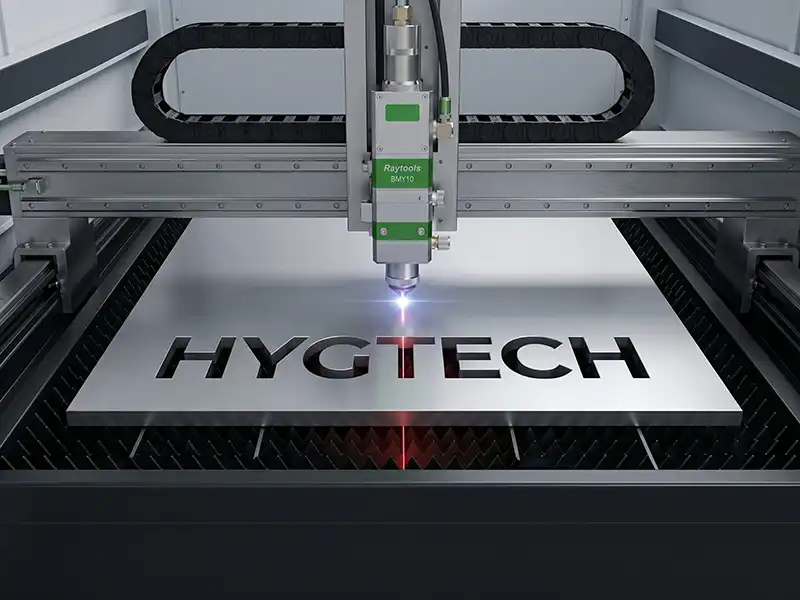
Modern high-power systems utilize Intelligent Stage Piercing. Instead of blasting the plate with continuous energy, the laser emits high-frequency, short-duration bursts combined with variable gas pressures. This creates a clean entry hole without creating a massive crater or splashing molten metal back onto the delicate laser ceramic nozzle. Following the pierce, the machine dynamically adjusts the assist gas ratio, switching to low-pressure oxygen to maintain a highly stable, uniform exothermic reaction throughout the path.
| Material Profile & Thickness | Optimal Laser Power Range | Assist Gas & Pressure Metrics | Achievable Edge Edge Quality |
|---|---|---|---|
| 20mm Carbon Steel (Q235/A36) | 12kW – 20kW Fiber Laser | O2 (Oxygen) @ 0.5 – 0.8 Bar | Smooth, vertical cut face; minimal dross; <0.05mm taper. |
| 25mm Stainless Steel (304/316) | 20kW – 30kW Fiber Laser | N2 (Nitrogen) @ 12 – 15 Bar | Bright, oxide-free mirror finish; zero discoloration. |
| 30mm Carbon Steel (Heavy Industrial) | 30kW Ultra-High Power | O2 (Low-Pressure Mix) @ 0.4 Bar | High-integrity perpendicular cut; stable long-run accuracy. |
Section Summary: Implementing multi-stage intelligent piercing and low-pressure gas cycles stabilizes the cutting front, ensuring clean profiles and protecting consumables during heavy-duty operations.
3. Calculating Operational ROI: Slashing Secondary Labor Costs by 70%
Many metal fabrication shop managers focus purely on the initial capital expense of a high-power fiber laser setup. The true financial transformation, however, is revealed when auditing downstream shop labor and consumable lifespans.
In traditional plasma cutting or low-power laser environments, processing 20mm plates requires an army of secondary workers equipped with handheld angle grinders to clean off slag and square up edges. By transitioning to a high-power automated fiber laser cutting center with intelligent thermal management, fabricators achieve real-world bottom-line gains:
- Elimination of Secondary Grinding: Delivers clean, weld-ready edge profiles directly off the cutting bed, cutting secondary labor hours by up to 70%.
- Drastic Speed Improvements: A 20kW fiber laser cuts 20mm carbon steel up to 4 to 5 times faster than a standard 6kW alternative, drastically multiplying daily tonnage output.
- Extended Nozzle Longevity: Controlled piercing processes reduce molten blowback, expanding the operational lifespan of expensive copper nozzles by 150%.
Section Summary: High-power fiber lasers pay for themselves rapidly by increasing cutting speeds fourfold and eliminating the secondary manual grinding bottlenecks that stall factory delivery schedules.
4. Preventive Maintenance Tactics for Sustained Thick Plate Accuracy
To ensure consistent micron-level precision across multi-shift operations, your maintenance crew must execute daily and weekly component audits designed for ultra-high-power optical setups.
First, inspect the laser cutting head’s internal protective windows for microscopic dust contamination; at 12kW+ power levels, even a single speck of dust will absorb laser energy, overheat, and crack the lens instantly. Second, ensure absolute concentricity between the laser beam and the copper nozzle center to prevent asymmetrical gas delivery, which causes severe cutting burrs on one side of the plate. Finally, maintain the water chiller’s dual-cooling circuits at precise temperatures to prevent thermal drifting in the laser source.
Section Summary: Daily protective lens inspections, strict nozzle centering calibration, and precise water chiller monitoring are vital to prevent thermal drifting and maintain thick plate cutting precision.
5. Thick Plate Laser Cutting FAQ
Q1: Why does the laser cut cleanly at the start but begin burning out half-way through a thick plate?
This is a classic symptom of localized thermal runaway. As the laser cuts, heat continuously builds up ahead of the beam path. If your nesting software places parts too closely together, or if you aren’t utilizing a ‘cooling-point’ or pulsing strategy on sharp corners, the plate temperature rises past the ignition point, causing a blowout. Increasing the cooling interval or adjusting your cutting path order will immediately solve this problem.
Q2: When should I choose Nitrogen over Oxygen when cutting thick stainless steel?
Nitrogen should be chosen when you require a completely bright, oxide-free cut surface that is ready for immediate high-spec welding or painting without chemical treating. Nitrogen relies purely on the kinetic energy of high-pressure gas (12-15 Bar) to blast away molten metal. However, it requires significantly more laser power (20kW+) to cut thick plates efficiently compared to Oxygen, which uses an exothermic chemical reaction.
Q3: How does active focus adjustment improve the edge profile on 20mm+ plates?
Thick plate cutting requires the laser’s energy beam waist to be positioned deep inside the material (often 30% to 50% below the top surface) to create a sufficiently wide kerf that allows molten metal to escape smoothly. Active, software-controlled focus adjustment tracking continuously moves the lens focus point dynamically during the cut cycle, preventing the edge from developing an undesirable excessive taper or bottom-heavy burrs.
Q4: What specific air purity level is required if using compressed air as an assist gas?
If you choose to use high-pressure compressed air for cutting thick plates up to 12mm-16mm as a cost-saving alternative, your air compressor filtration system must meet ISO 8573-1 Class 1 for oil and water purity. Any trace oil or moisture mist traveling through the cutting head under 15-20 Bar of pressure will immediately contaminate the protective lens windows, leading to catastrophic optical failure within minutes.
 English
  Spanish